Knee sweep
124-136 deg
Average left/right knee angle range across the two processed clips.

1500m track samples
Cole is the best current demo case because the clips force the pipeline to follow one runner through a pack and then through a fast finishing segment.
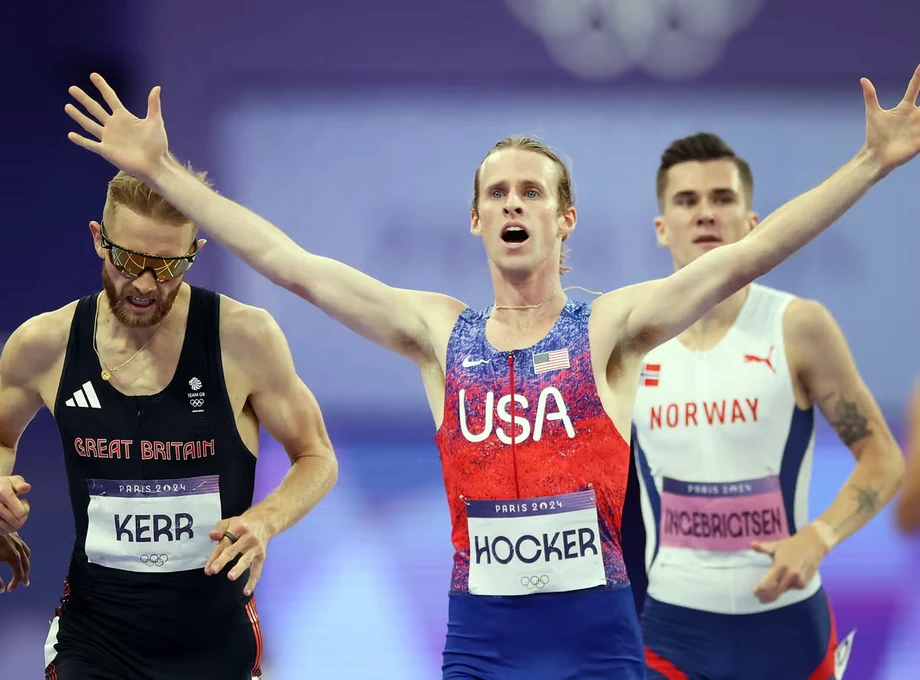
Compact upper body, quick turnover, and a bigger knee-angle sweep when the finish segment opens up.
These are clip-derived signals, not a coaching diagnosis. The point is to show what the pipeline can read and where the video still needs review.
Knee sweep
124-136 deg
Average left/right knee angle range across the two processed clips.
Hip bounce
5.9-7.1%
Normalized hip vertical oscillation proxy from pose landmarks.
Readable frames
91-100%
Frames where the pipeline kept enough pose signal to use the stride.
A longer 1500m excerpt with camera motion, broadcast graphics, and pack traffic.
Stride rhythm proxy
7.75
Peak spacing in the lower-body motion signal.
Knee lift proxy
32%
Relative vertical knee travel in the normalized pose.
Pose visibility
81%
Mean landmark visibility across the usable clip.
Runner isolation
The selected runner mask over the source segment.
Stride skeleton
Pose landmarks rendered frame by frame.
A shorter 1500m sample where the runner is easier to see and the stride opens up.
Stride rhythm proxy
7.99
Peak spacing in the lower-body motion signal.
Knee lift proxy
41%
Relative vertical knee travel in the normalized pose.
Pose visibility
85%
Mean landmark visibility across the usable clip.
Runner isolation
The selected runner mask over the source segment.
Stride skeleton
Pose landmarks rendered frame by frame.