Knee sweep
124 deg
Average left/right knee angle range in the processed clip.

Marathon road sample
Kiptum's clip moves the system away from track footage. The pose read is harder, but that makes it useful for testing road angles and pacing groups.
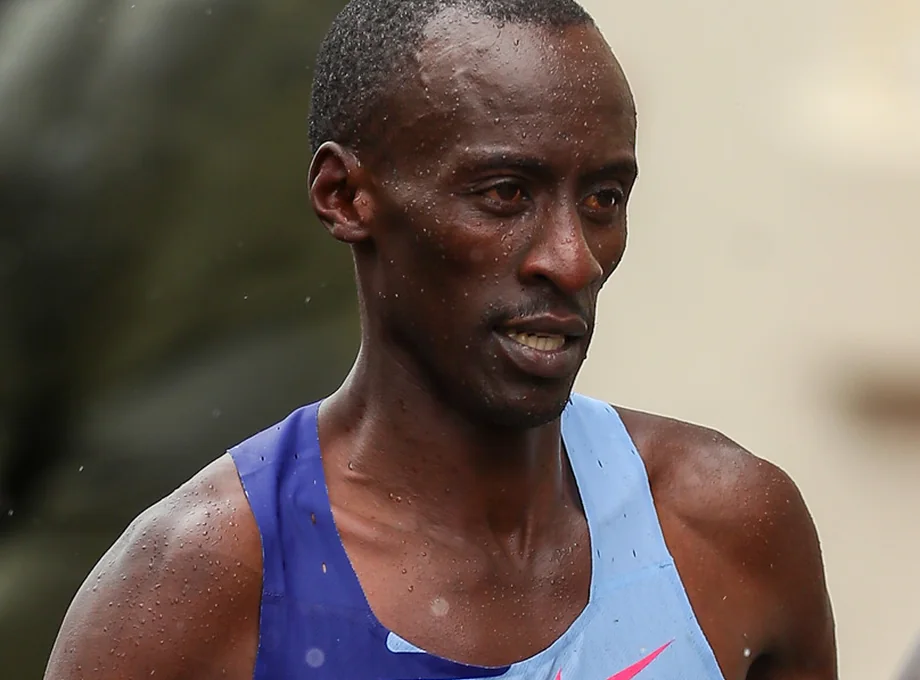
Road-race rhythm, higher hip-motion proxy, and lower pose visibility because the camera angle is less controlled.
These are clip-derived signals, not a coaching diagnosis. The point is to show what the pipeline can read and where the video still needs review.
Knee sweep
124 deg
Average left/right knee angle range in the processed clip.
Hip bounce
15.9%
Normalized hip vertical oscillation proxy from pose landmarks.
Readable frames
96%
Frames where the pipeline kept enough pose signal to use the stride.
A road clip with a pacing pack and a less stable broadcast angle.
Stride rhythm proxy
1.16
Peak spacing in the lower-body motion signal.
Knee lift proxy
79%
Relative vertical knee travel in the normalized pose.
Pose visibility
46%
Mean landmark visibility across the usable clip.
Runner isolation
The selected runner mask over the source segment.
Stride skeleton
Pose landmarks rendered frame by frame.